Police Intervention, Use of Force and Ethical Responsibility
The Role of Negotiation in Democratic Policing
Democratic Policing and Negotiation | Part 2 of 5
SRL Research Team | 17 October 2026
Policing peaceful assemblies is not solely a matter of maintaining public order. It is also a test of democratic legitimacy, respect for human dignity and the state’s commitment to fundamental rights. Decisions about police intervention and the use of force must therefore be assessed in both legal and ethical terms.
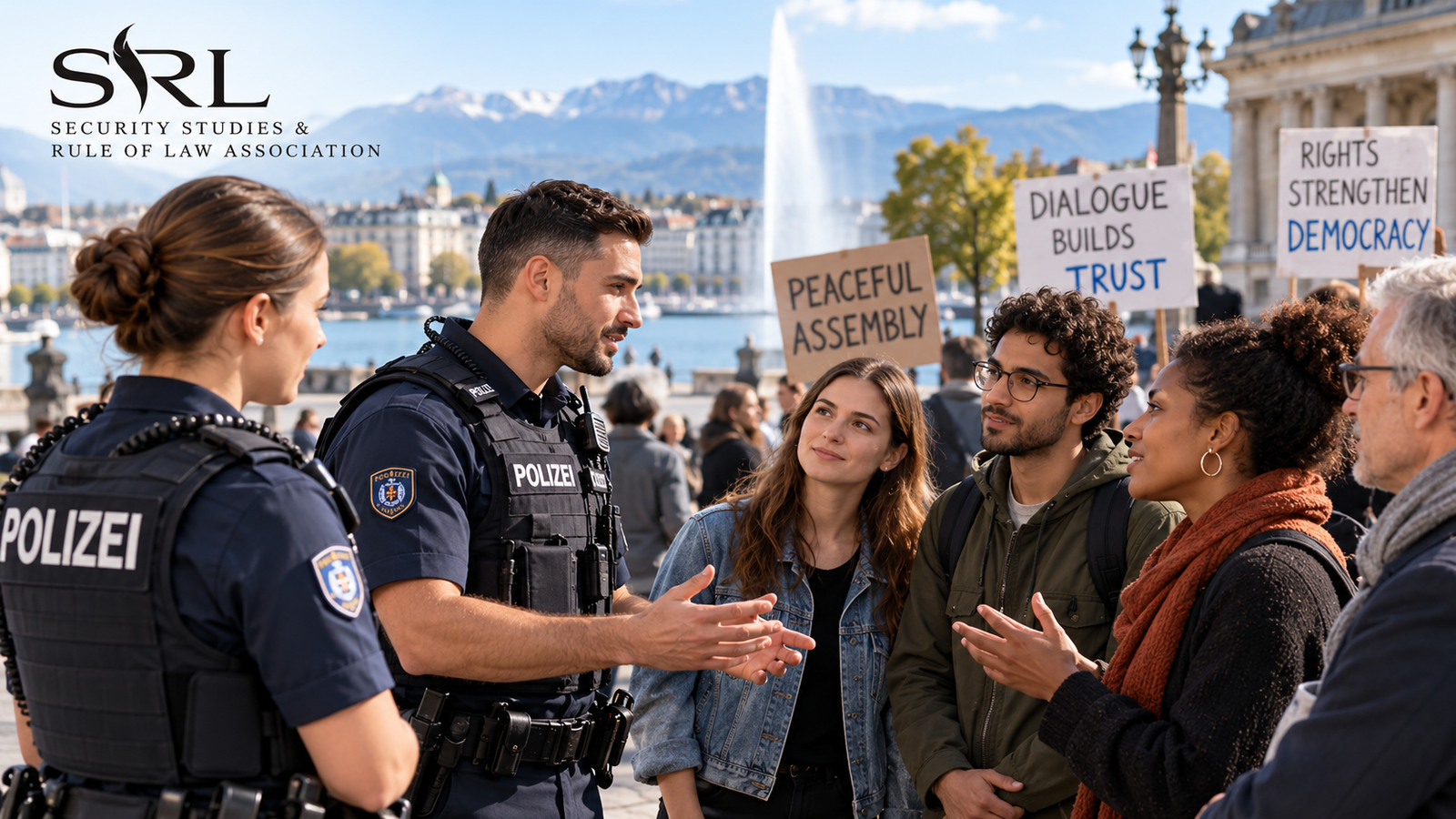
In the second article of its five-part series, Democratic Policing and Negotiation, SRL Swiss examines the relationship between police ethics, proportionality and negotiation. The central question is whether meaningful dialogue can help prevent unnecessary force while enabling people to exercise the right to peaceful assembly.
Police Ethics and Democratic Legitimacy
Police ethics goes beyond compliance with the law. It requires impartiality, restraint, respect for human dignity and a commitment to democratic principles. Even a legally authorised intervention may raise ethical concerns about its necessity, manner and effects.
The Council of Europe’s European Code of Police Ethics identifies the protection of fundamental rights as a central purpose of policing. It also requires force to be used only when strictly necessary and to the extent required to achieve a legitimate objective. These standards place accountability at the centre of public-order policing.
Use of Force: Necessity, Proportionality and the Last Resort
International standards require law enforcement officials, as far as possible, to apply non-violent means before resorting to force. Where force is unavoidable, it must remain necessary and proportionate to the legitimate objective pursued. The type and intensity of force also matter; the principle of last resort is not merely a question of timing.
The threshold for intentionally lethal use of firearms is stricter still: it is permissible only when strictly unavoidable in order to protect life. Firearms cannot be justified merely as a means of dispersing an assembly.
Negotiation does not remove the police duty to intervene when lawful and necessary. It can, however, provide opportunities to clarify misunderstandings, address foreseeable risks and avoid escalation before force becomes an issue.
Dialogue Must Respect the Right to Assemble
Dialogue has ethical value only when it is conducted honestly and without discrimination. Officers must provide accurate information, listen to participants’ concerns and avoid promises they cannot fulfil.
The UN Human Rights Committee’s General Comment No. 37 encourages communication before and during assemblies but makes clear that organisers and participants may not be compelled to engage in dialogue. Negotiation must not become a condition for exercising a fundamental right or a method of pressuring demonstrators to abandon their demands.
The Swedish Police’s explanation of dialogue policing illustrates an institutional approach based on communication, mutual respect and conflict prevention. Such arrangements offer practical lessons, although the existence of a dialogue function is not itself evidence that every operation succeeds.
Trust, Oversight and Institutional Responsibility
Constructive communication can contribute to public trust, explain the reasons for police measures and reduce the risk of tension. Those outcomes are not automatic. They depend on whether officers’ conduct during an operation is consistent with the commitments made through dialogue.
Police accountability continues after negotiations end. Intervention decisions must be capable of justification and review; the use of force must be scrutinised; and complaints must be handled through effective, impartial mechanisms. These safeguards are as important to democratic legitimacy as dialogue itself.
Conclusion
Negotiation and police ethics should not be treated as separate concerns in the management of public assemblies. A force-centred approach may appear to restore order in the short term while carrying longer-term risks for public trust and institutional legitimacy.
A dialogue-oriented model can contribute to a more balanced relationship between public safety and fundamental freedoms, provided it is supported by restraint, transparency and accountability. SRL Swiss therefore regards negotiation not as an optional courtesy, but as an essential component of democratic policing.
The full SRL Swiss research paper includes the complete discussion of police ethics, international standards governing the use of force, and the ethical conditions of dialogue, with four numbered references.
Democratic Policing and Negotiation — A Five-Part Research Series
Next article: Negotiation in Türkiye: Early Initiatives
Publication date: 21 October 2026