
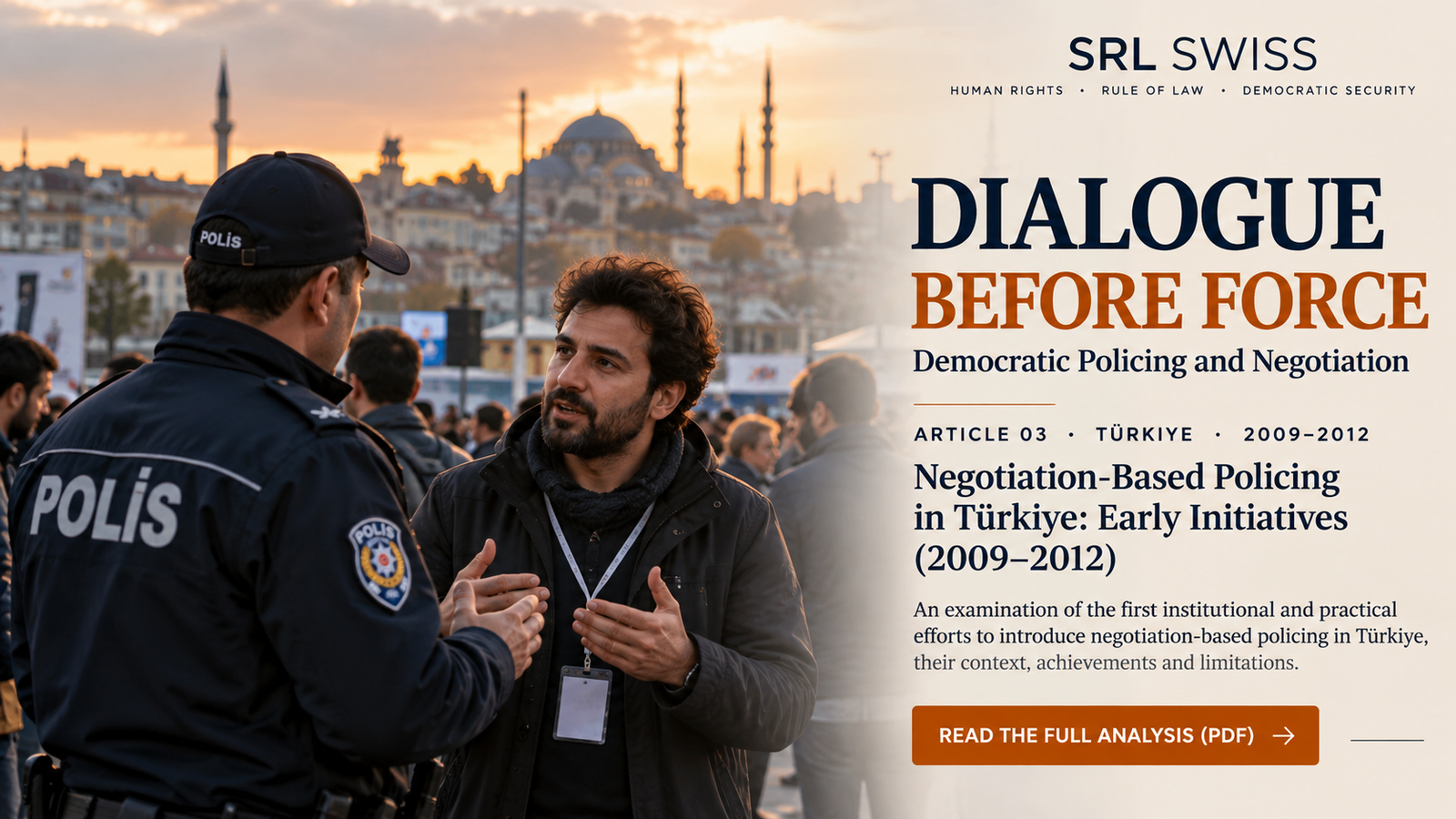
Negotiation-Based Policing in Türkiye: Early Initiatives (2009–2012)
This third article in SRL Swiss’s Democratic Policing and Negotiation series examines the early development of negotiation-based public order policing in Türkiye between 2009 and 2012. It explores institutional reform initiatives, police training programmes and efforts to incorporate dialogue, de-escalation and respect for fundamental rights into the management of public demonstrations.
The analysis highlights early training initiatives coordinated by the Turkish National Police, the development of specialised negotiation roles and the significance of the relatively peaceful May Day gatherings in Istanbul’s Taksim Square between 2010 and 2012. These experiences illustrate the potential of communication and cooperation to reduce tensions while safeguarding the right to peaceful assembly.
The article also critically examines the institutional challenges that emerged after 2013, including the Gezi Park protests, extensive personnel changes and their potential consequences for professional expertise and institutional memory. While negotiation training continued in subsequent years, questions remain concerning its practical effectiveness and institutional independence.
The central conclusion is that democratic policing cannot be sustained through training programmes and written regulations alone. Lasting reform requires professional autonomy, institutional continuity, accountability and a genuine commitment to dialogue before the use of force.
Democratic Policing and Negotiation | Article 3 of 5
SRL Research Team — 21 October 2026